Cancer: Improving the Gut Microbiome Part II
Published in the May/June 2023 edition of ‘The Bay’ Magazine

Cancer: Improving the Gut Microbiome Part II: printer friendly, text version
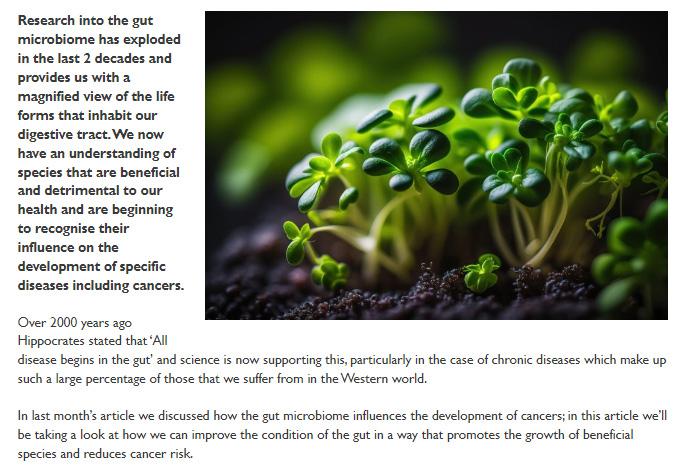
Research into the gut microbiome has exploded in the last 2 decades and provides us with a magnified view of the life forms that inhabit our digestive tract. We now have an understanding of species that are beneficial and detrimental to our health and are beginning to recognise their influence on the development of specific diseases including cancers.
Over 2000 years ago Hippocrates stated that ‘All disease begins in the gut’ and science is now supporting this, particularly in the case of chronic diseases which make up such a large percentage of those that we suffer from in the Western world.
In last month’s article we discussed how the gut microbiome influences the development of cancers; in this article we’ll be taking a look at how we can improve the condition of the gut in a way that promotes the growth of beneficial species and reduces cancer risk.
Dietary Diversity and Plenty of Plant-Based Foods
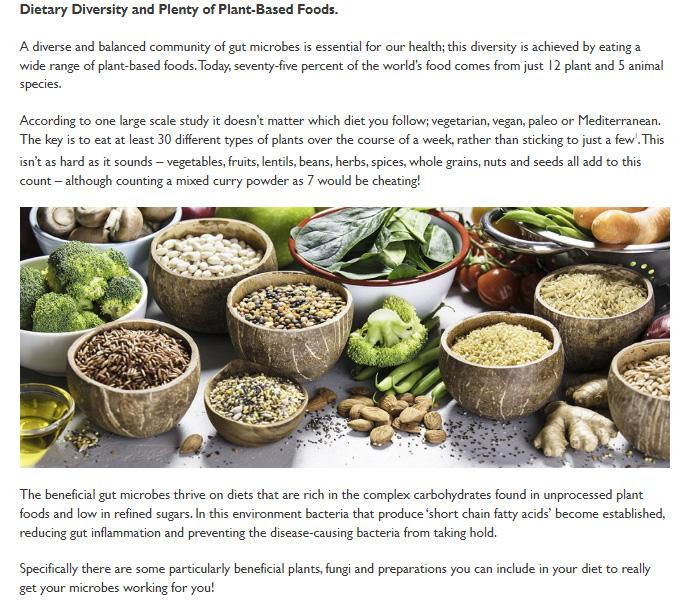
A diverse and balanced community of gut microbes is essential for our health; this diversity is achieved by eating a wide range of plant-based foods. Today, seventy-five percent of the world’s food comes from just 12 plant and 5 animal species.
According to one large scale study it doesn’t matter which diet you follow; vegetarian, vegan, paleo or Mediterranean. The key is to eat at least 30 different types of plants over the course of a week, rather than sticking to just a few1. This isn’t as hard as it sounds – vegetables, fruits, lentils, beans, herbs, spices, whole grains, nuts and seeds all add to this count – although counting a mixed curry powder as 7 would be cheating!
The beneficial gut microbes thrive on diets that are rich in the complex carbohydrates found in unprocessed plant foods and low in refined sugars. In this environment bacteria that produce ‘short chain fatty acids’ become established, reducing gut inflammation and preventing the disease-causing bacteria from taking hold.
Specifically there are some particularly beneficial plants, fungi and preparations you can include in your diet to really get your microbes working for you!
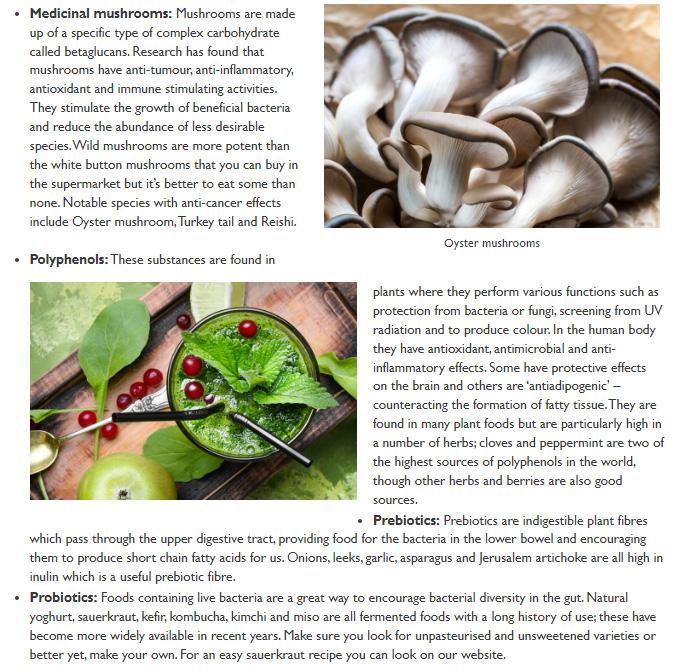
- Medicinal mushrooms: Mushrooms are made up of a specific type of complex carbohydrate called beta-glucans. Research has found that mushrooms have anti-tumour, anti-inflammatory, antioxidant and immune stimulating activities. They stimulate the growth of beneficial bacteria and reduce the abundance of less desirable species. Wild mushrooms are more potent than the white button mushrooms that you can buy in the supermarket but it’s better to eat some than none. Notable species with anti-cancer effects include Oyster mushroom, Turkey tail and Reishi.
- Polyphenols: These substances are found in plants where they perform various functions such as protection from bacteria or fungi, screening from UV radiation and to produce colour. In the human body they have antioxidant, antimicrobial and anti-inflammatory effects. Some have protective effects on the brain and others are ‘antiadipogenic’ – counteracting the formation of fatty tissue. They are found in many plant foods but are particularly high in a number of herbs; cloves and peppermint are two of the highest sources of polyphenols in the world, though other herbs and berries are also good sources.
- Prebiotics: Prebiotics are indigestible plant fibres which pass through the upper digestive tract, providing food for the bacteria in the lower bowel and encouraging them to produce short chain fatty acids for us. Onions, leeks, garlic, asparagus and Jerusalem artichoke are all high in inulin which is a useful prebiotic fibre.
- Probiotics: Foods containing live bacteria are a great way to encourage bacterial diversity in the gut. Natural yoghurt, sauerkraut, kefir, kombucha, kimchi and miso are all fermented foods with a long history of use; these have become more widely available in recent years. Make sure you look for unpasteurised and unsweetened varieties or better yet, make your own. For an easy sauerkraut recipe you can look on our website.
A Digestive System in Good Working Order
It is very rare to find a person suffering with illness whose digestion is in good order; at the clinic this is one of the key issues we address. In relation to the gut microbiome there tends to be a two-way effect – dysbiosis (an imbalance in the gut flora) results in poor function of the digestive organs and poor function of the digestive organs creates dysbiosis. This means that unless you address digestive issues as they arise, a negative spiral can occur.
They primary organs of the digestive system to attend to are:
The Stomach: Here the highly acidic environment destroys many disease causing bacteria before they can enter the gut. A low level of stomach acid does not perform well in this task. Be cautious of mistaking acid reflux for high acidity – this is more often caused by a low acid level which results in food sitting in the stomach for longer. Antacid treatments only worsen this situation in the long term.
The Liver: The liver is responsible for the production of bile acids which act as potent antimicrobials in the upper part of the digestive tract. This prevents the growth of bacteria in the wrong place, such as that which occurs with ‘SIBO’ – small intestinal bacterial overgrowth. Lower down in the digestive tract the gut bacteria transform the bile acids into numerous other substances which have beneficial effects.
The Lower Bowel: Stagnant matter in the bowels encourages the proliferation of undesirable bacterial species so regular evacuation of the bowels is essential. Constipation also has a knock-on effect higher up in the digestive tract and functioning here can become impaired. Between 1 – 3 bowel motions per day is healthy.
Herbs are particularly effective in restoring digestive functioning whilst improving the gut microbiome.
Physical Activity
Did you know that physical fitness is associated with a greater abundance of butyrate producing bacteria. Butyrate reduces inflammation of the gut lining, strengthens the gut barrier, regulates gut sensitivity and improves gut motility. One study on women found that those who were active had a greater diversity of gut bacteria; ‘active’ was defined as 30 minutes of moderate activity (making you breathe faster and feel warm) on 5 days of the week.
How to Harm your Gut Bacteria
Just a little guide on what not to do! Obviously, if you want to create havoc with your little critters you could eat a diet of highly processed foods, include plenty of sugar, avoid vegetables like the plague, ignore any digestive malfunctioning and be sedentary for most of the day. Here are a few extras:
Live Life on the Edge (of your Tether): We know that chronic stress causes disease, and not surprisingly it impacts the health of the gut microbiome too. We’re not always very good at recognising when we’re suffering with this. Unprocessed emotions can create a hidden stress in the mind which impacts daily life in subtle ways.
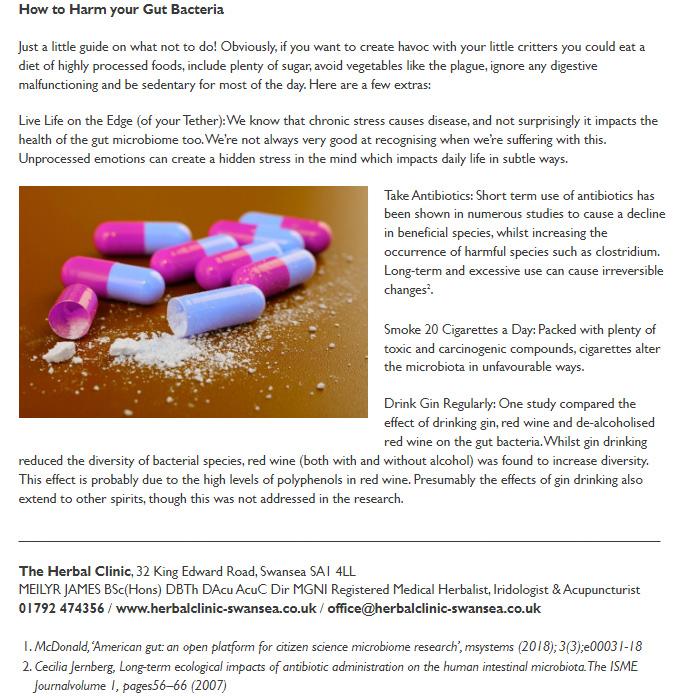
Take Antibiotics: Short term use of antibiotics has been shown in numerous studies to cause a decline in beneficial species, whilst increasing the occurrence of harmful species such as clostridium. Long-term and excessive use can cause irreversible changes2.
Smoke 20 Cigarettes a Day: Packed with plenty of toxic and carcinogenic compounds, cigarettes alter the microbiota in unfavourable ways.
Drink Gin Regularly: One study compared the effect of drinking gin, red wine and de-alcoholised red wine on the gut bacteria. Whilst gin drinking reduced the diversity of bacterial species, red wine (both with and without alcohol) was found to increase diversity. This effect is probably due to the high levels of polyphenols in red wine. Presumably the effects of gin drinking also extend to other spirits, though this was not addressed in the research.
- McDonald, ‘American gut: an open platform for citizen science microbiome research’, msystems (2018); 3(3);e00031-18
- Cecilia Jernberg, Long-term ecological impacts of antibiotic administration on the human intestinal microbiota. The ISME Journalvolume 1, pages56–66 (2007)
The ‘Herbal Clinic’ in Swansea provides natural medicine healthcare with the use of organic herbs, acupuncture and iridology.

This Post Has 0 Comments