
Just a Spoonful of Bitters (helps the sugar cravings go down)
Published in the Winter 2023 edition of ‘The Bay’ Magazine



Just a Spoonful of Bitters (helps the sugar cravings go down: printer friendly, text version
If you plan to cut out sugar you can give yourself a helping hand by taking some herbal bitters regularly; here’s our pick of some beneficial bitters and reasons why you may want to bring on the bitterness!
Excess intake of sweet foods is common in most western societies. Selective breeding has pandered to our preferences and typically bitter foods are now much milder than they once were. Our year round access to foods which were scarce, or only available for a short season, has allowed us to choose sweet tastes on a daily basis; these are associated with the presence of energy rich sugars and a sense of feeling nurtured.
Foods that we associate with ‘savoury’ such as a pasty or a sandwich behave like sugar in the body –the refined wheat flour from which they are made breaks down rapidly into simple carbohydrates, causing blood sugar levels to spike.
But there is an antidote to sweet and that is bitter.
Bitter is an acquired taste. Children (and many adults) often turn up their noses to foods with a bitter flavour such as green vegetables. To our hunter/gatherer ancestors a strong bitter taste would have alerted them to the possible presence of toxic compounds that could threaten their health; however, our ancestral diet would have included many more bitter flavours than we eat today.
Bitter receptors are present in the mouth and throughout the digestive tract; our cells can ‘taste’ bitter all the way down. This bitter flavour stimulates the release of hormones that help to control the appetite and keep cravings at bay. In addition, they undo many of the negative effects of excessive sweet intake – helping to improve digestive functioning, improve glycaemic control and reduce body weight.
Bitter Herbs
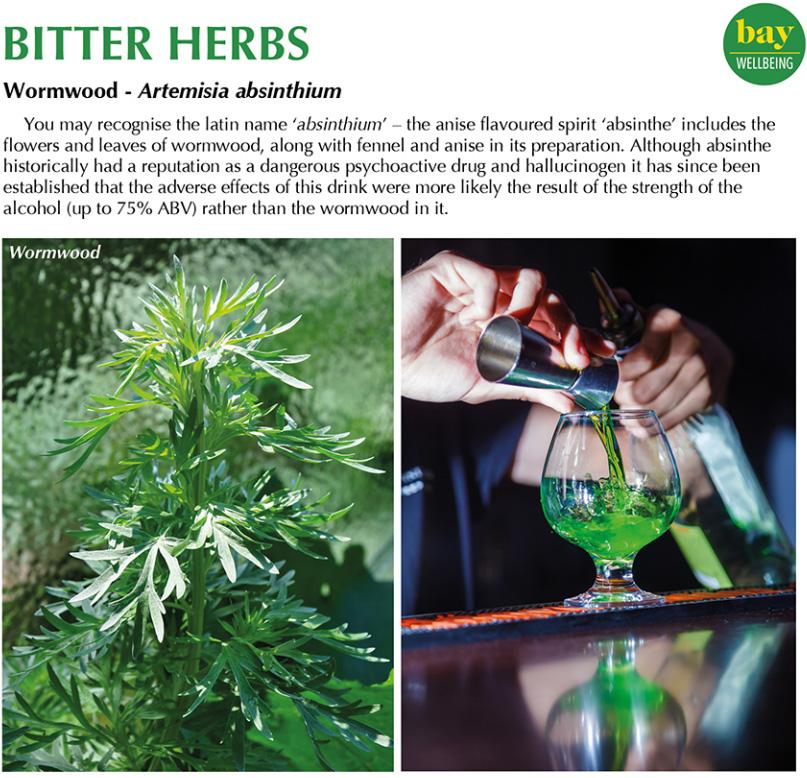
Wormwood – Artemisia absinthium
You may recognise the latin name ‘absinthium’ – the anise flavoured spirit ‘absinthe’ includes the flowers and leaves of wormwood, along with fennel and anise in its preparation. Although absinthe historically had a reputation as a dangerous psychoactive drug and hallucinogen it has since been established that the adverse effects of this drink were more likely the result of the strength of the alcohol (up to 75% ABV) rather than the wormwood in it.
Therapeutically, wormwood has been used since antiquity as a liver tonic used for cleansing toxins from the gut and relieving inflammatory and infective digestive problems. It is an effective tonic for people with weakened digestion and associated lack of appetite, poor absorption and low energy. The common name ‘wormwood’ stems from its use in treating parasites, this includes pin worms and tapeworms but it is also useful for the microscopic ‘parasites’ that many today struggle with; those bacteria and yeasts that get out of balance in the gut microbiome and contribute to poor health and chronic disease as well as unhealthy food cravings1.
In addition to its traditional uses, research has found that it possesses antifungal, neuroprotective, antimalarial and antidepressant activities.
Wormwood is a strong bitter – just a few drops are enough to have an effect. It shouldn’t be used for extended periods of time without guidance but it can be used for a short duration in small quantities.
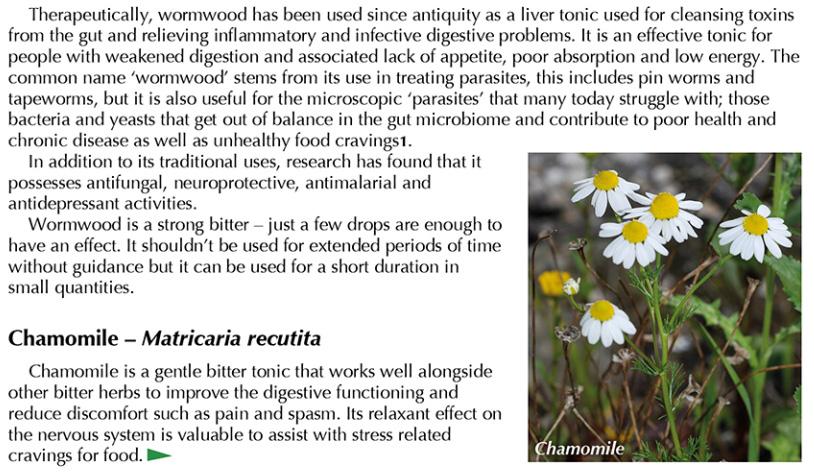
Chamomile – Matricaria recutita
Chamomile is a gentle bitter tonic that works well alongside other bitter herbs to improve the digestive functioning and reduce discomfort such as pain and spasm. Its relaxant effect on the nervous system is valuable to assist with stress related cravings for food.
Fennel – Foeniculum vulgare
Fennel is mildly bitter, combined with a sweetness and warmth that helps make stronger bitters more palatable. It improves the digestive function and helps to remove toxins from the system as well as reducing colic, cramping and bloating. Fennel is enlivening for the mind and is one of the herbs traditionally recommended in ayurvedic medicine for postprandial somnolence – also known as ‘food coma’ or sleepiness after eating! Chewing a few raw or lightly toasted fennel seeds after meals can help to stop you reaching for a sweet dessert to lift your energy.
Gentian – Gentiana lutea
Gentian contains the compound ‘amarogentin’ – one of the most bitter natural substances known which is used as a basis for measuring bitterness. It has similar uses to wormwood, stimulating the liver, gall bladder and digestive system, as a tonic for digestive weakness, lack of appetite and with antiparasitic actions too. It improves digestion and absorption without aggravating acidity and aids the breakdown of proteins and fats.
Preparing Bitters
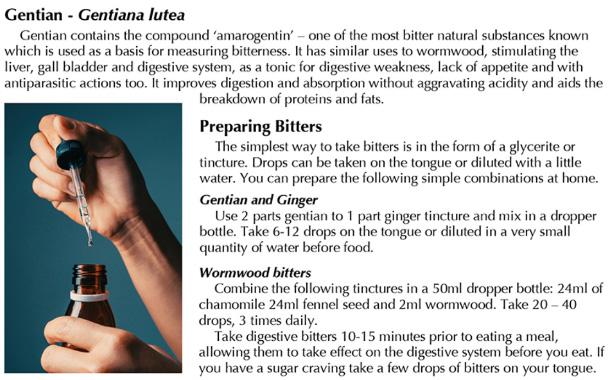
The simplest way to take bitters is in the form of a glycerite or tincture. Drops can be taken on the tongue or diluted with a little water. You can prepare the following simple combinations at home.
Gentian and Ginger
Use 2 parts gentian to 1 part ginger tincture and mix in a dropper bottle. Take 6-12 drops on the tongue or diluted in a very small quantity of water before food.
Wormwood bitters
Combine the following tinctures in a 50 ml dropper bottle: 24ml of chamomile 24ml fennel seed and 2ml wormwood. Take 20 – 40 drops, 3 times daily.
Take digestive bitters 10-15 minutes prior to eating a meal, allowing them to take effect on the digestive system before you eat. If you have a sugar craving take a few drops of bitters on your tongue.
The ‘Herbal Clinic’ in Swansea provides natural medicine healthcare with the use of organic herbs, acupuncture and iridology.

This Post Has 0 Comments