The White Decision
Published in the October 2023 edition of ‘The Bay’ Magazine
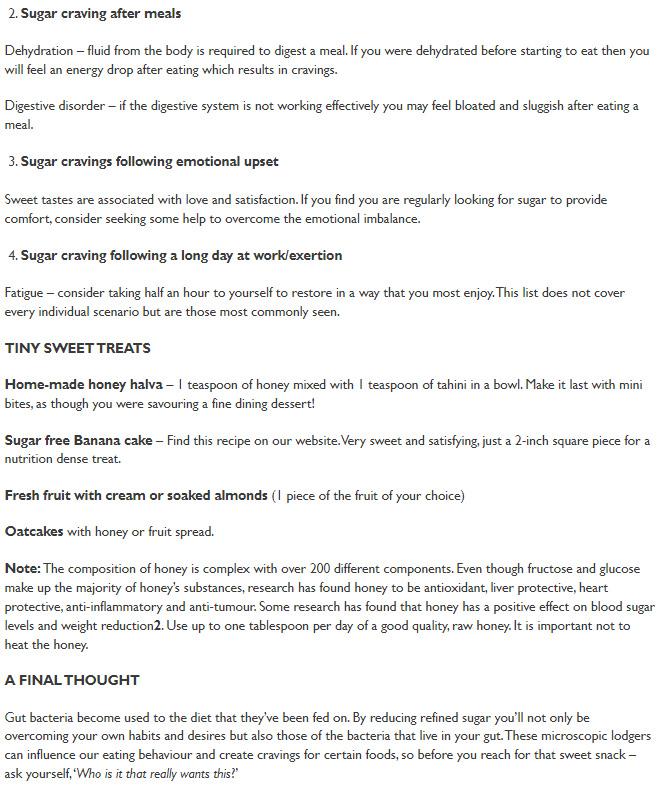
The White Decision – printer friendly, text version
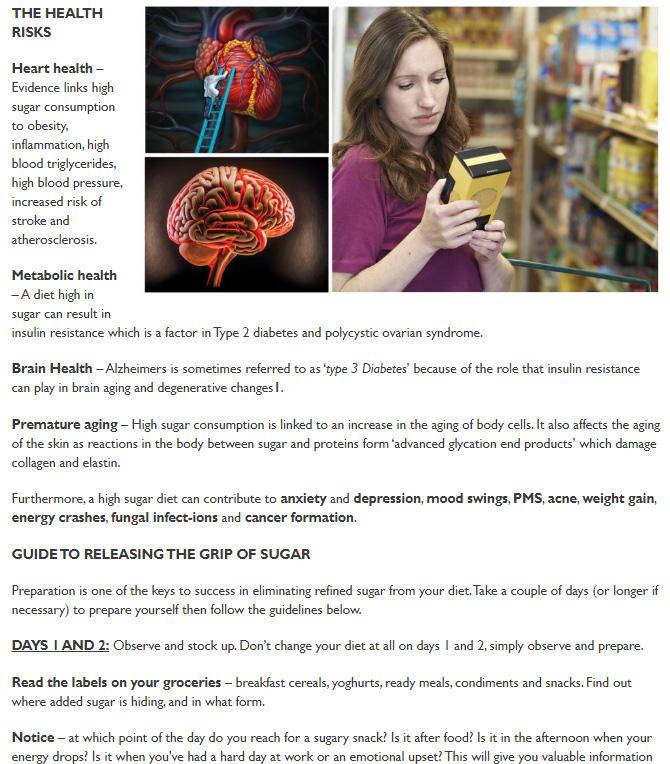
Want to drop your sugar habit? Tried before and not succeeded? Wondering what all the fuss is about sugar and why you might want to wean yourself off of the white stuff anyway? Here’s our guide to a gentle transition into a sweet life without refined sugar.
It’s hard to get away from refined sugar. In the supermarket you’ll find it in the obvious places – amongst the sweets, chocolates, desserts and pastries. However, it’s also in the breakfast cereals, condiments, savoury snacks, drinks, yoghurts, ready meals, spreads – you have to go out of your way to avoid it. Sometimes the labelling isn’t obvious; maltodextrin, corn syrup, glucose, dextrin, lactose, malt syrup, fructose (to name a few) are all refined sugars.
A little sugar in the diet is not a problem for many people, but sugar has a habit of making you want more as reward pathways in the brain are triggered in a way that make you feel relaxed. The more sugar you eat, the more you need to produce the same effect. In addition, it’s easy to underestimate how much sugar is in each product – just one confectionery bar alone often contains more than the daily recommended serving of sugar. Add up a daily tally with a glass of fruit juice, morning granola and a fruit yogurt (foods that may be considered relatively healthy), and most people are doubling what is already a questionable limit.
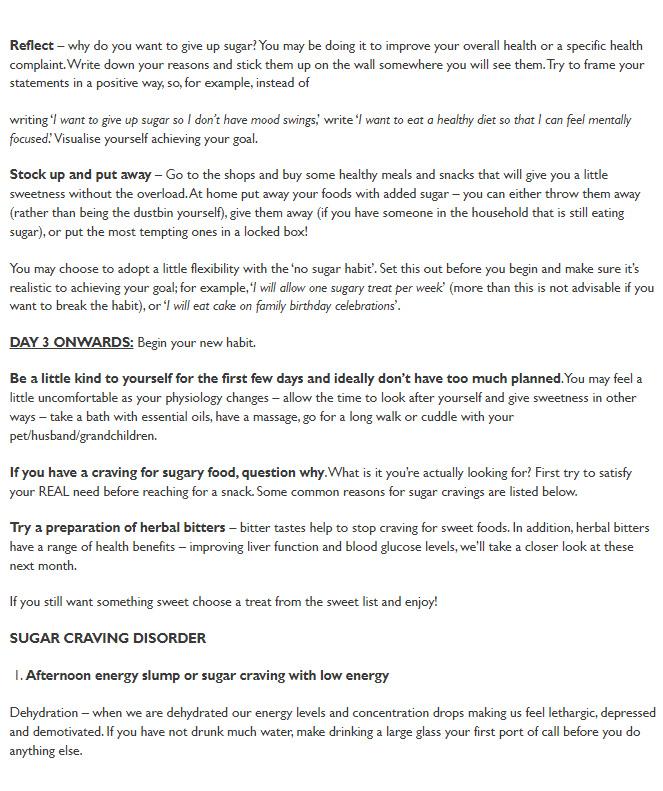
The Health Risks
Heart health – Evidence links high sugar consumption to obesity, inflammation, high blood triglycerides, high blood pressure, increased risk of stroke and atherosclerosis.
Metabolic health – A diet high in sugar can result in insulin resistance which is a factor in Type 2 diabetes and polycystic ovarian syndrome.
Brain Health – Alzheimers is sometimes referred to as ‘type 3 Diabetes’ because of the role that insulin resistance can play in brain aging and degenerative changes1.
Premature aging – High sugar consumption is linked to an increase in the aging of body cells. It also affects the aging of the skin as reactions in the body between sugar and proteins form ‘advanced glycation end products’ which damage collagen and elastin.
Furthermore, a high sugar diet can contribute to anxiety and depression, mood swings, PMS, acne, weight gain, energy crashes, fungal infections and cancer formation.
Guide to Releasing the Grip of Sugar
Preparation is one of the keys to success in eliminating refined sugar from your diet. Take a couple of days (or longer if necessary) to prepare yourself then follow the guidelines below.
Days 1 and 2: Observe and stock up. Don’t change your diet at all on days 1 and 2, simply observe and prepare.
Read the labels on your groceries – breakfast cereals, yoghurts, ready meals, condiments and snacks. Find out where added sugar is hiding, and in what form.
Notice – at which point of the day do you reach for a sugary snack? Is it after food? Is it in the afternoon when your energy drops? Is it when you’ve had a hard day at work or an emotional upset? This will give you valuable information on actions to take to reduce your sugar cravings.
Reflect – why do you want to give up sugar? You may be doing it to improve your overall health or a specific health complaint. Write down your reasons and stick them up on the wall somewhere you will see them. Try to frame your statements in a positive way, so, for example, instead of writing ‘I want to give up sugar so I don’t have mood swings,’ write ‘I want to eat a healthy diet so that I can feel mentally focused.’ Visualise yourself achieving your goal.
Stock up and put away – Go to the shops and buy some healthy meals and snacks that will give you a little sweetness without the overload. At home put away your foods with added sugar – you can either throw them away (rather than being the dustbin yourself), give them away (if you have someone in the household that is still eating sugar), or put the most tempting ones in a locked box!
You may choose to adopt a little flexibility with the ‘no sugar habit’. Set this out before you begin and make sure it’s realistic to achieving your goal; for example, ‘I will allow one sugary treat per week’ (more than this is not advisable if you want to break the habit), or ‘I will eat cake on family birthday celebrations’.
Day 3 onwards: Begin your new habit.
Be a little kind to yourself for the first few days and ideally don’t have too much planned. You may feel a little uncomfortable as your physiology changes – allow the time to look after yourself and give sweetness in other ways – take a bath with essential oils, have a massage, go for a long walk or cuddle with your pet/husband/grandchildren.
If you have a craving for sugary food, question why. What is it you’re actually looking for? First try to satisfy your REAL need before reaching for a snack. Some common reasons for sugar cravings are listed below.
Try a preparation of herbal bitters – bitter tastes help to stop craving for sweet foods. In addition, herbal bitters have a range of health benefits – improving liver function and blood glucose levels, we’ll take a closer look at these next month.
If you still want something sweet choose a treat from the sweet list and enjoy!
Sugar Craving Decoder
- Afternoon energy slump or sugar craving with low energy
Dehydration – when we are dehydrated our energy levels and concentration drops making us feel lethargic, depressed and demotivated. If you have not drunk much water, make drinking a large glass your first port of call before you do anything else.
- Sugar craving after meals
Dehydration – fluid from the body is required to digest a meal. If you were dehydrated before starting to eat then you will feel an energy drop after eating which results in cravings.
Digestive disorder – if the digestive system is not working effectively you may feel bloated and sluggish after eating a meal
- Sugar cravings following emotional upset
Sweet tastes are associated with love and satisfaction. If you find you are regularly looking for sugar to provide comfort, consider seeking some help to overcome the emotional imbalance.
- Sugar craving following a long day at work/exertion
Fatigue – consider taking half an hour to yourself to restore in a way that you most enjoy.
This list does not cover every individual scenario but are those most commonly seen.
Tiny Sweet Treats
Home-made honey halva – 1 teaspoon of honey mixed with 1 teaspoon of tahini in a bowl. Make it last with mini bites, as though you were savouring a fine dining dessert!
Sugar free Banana cake – Find this recipe on our website. Very sweet and satisfying, just a 2 inch square piece for a nutrition dense treat.
Fresh fruit with cream or soaked almonds (1 piece of the fruit of your choice)
Oatcakes with honey or fruit spread.
Note: The composition of honey is complex with over 200 different components. Even though fructose and glucose make up the majority of honey’s substances, research has found honey to be antioxidant, liver protective, heart protective, anti-inflammatory and anti-tumour. Some research has found that honey has a positive effect on blood sugar levels and weight reduction2. Use up to one tablespoon per day of a good quality, raw honey. It is important not to heat the honey.
A Final Thought
Gut bacteria become used to the diet that they’ve been fed on. By reducing refined sugar you’ll not only be overcoming your own habits and desires but also those of the bacteria that live in your gut. These microscopic lodgers can influence our eating behaviour and create cravings for certain foods, so before you reach for that sweet snack – ask yourself, ‘Who is it that really wants this?’
- Aleksandra Sędzikowska and Leszek Szablewski. Insulin and Insulin Resistance in Alzheimer’s Disease. Int J Mol Sci. 2021 Sep; 22(18): 9987.
- Otilia Bobiş et al.Honey and Diabetes: The Importance of Natural Simple Sugars in Diet for Preventing and Treating Different Type of Diabetes. Oxid Med Cell Longev.2018; 2018: 4757893.
The ‘Herbal Clinic’ in Swansea provides natural medicine healthcare with the use of organic herbs, acupuncture and iridology.

This Post Has 0 Comments