
Four Medicinal Herbs to Plant this Spring
Published in the March 2023 edition of ‘The Bay’ Magazine


Four Medicinal Herbs to Plant this Spring: printer friendly, text version
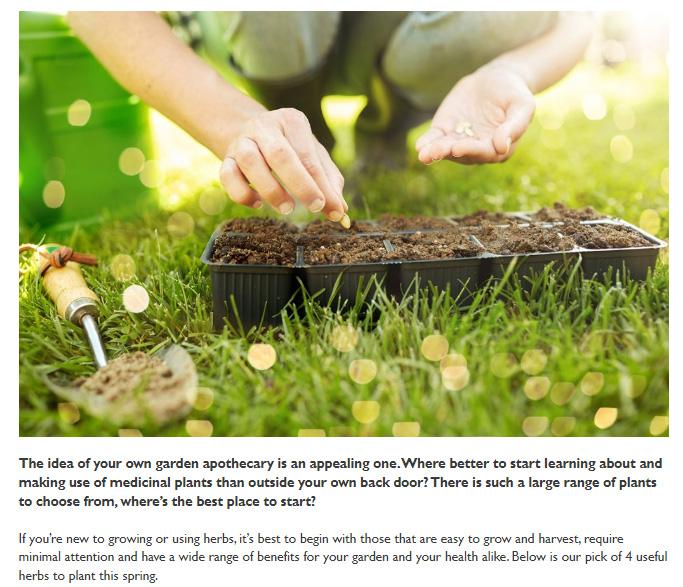
The idea of your own garden apothecary is an appealing one. Where better to start learning about and making use of medicinal plants than outside your own back door? There is such a large range of plants to choose from, where’s the best place to start?
If you’re new to growing or using herbs, it’s best to begin with those that are easy to grow and harvest, require minimal attention and have a wide range of benefits for your garden and your health alike. Below is our pick of 4 useful herbs to plant this spring.
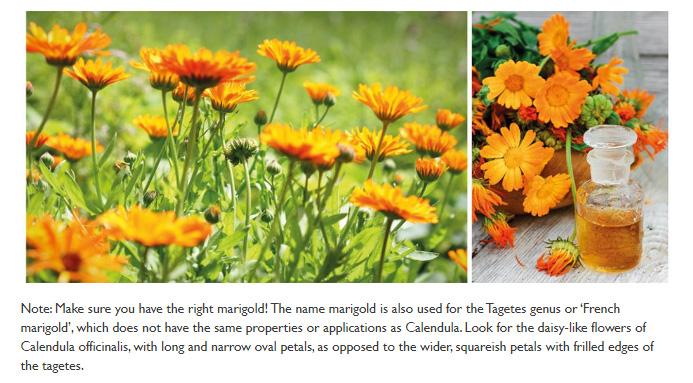
Calendula officinalis (Pot marigold)
It’s difficult not to feel uplifted by the rich vibrant orange of Calendula blooming, the blossoms beginning in the summer and continuing into late autumn. In the garden Calendula is known to deter pests such as aphids, whilst attracting ladybirds and lacewings which prey on these insects.
Calendula has a variety of uses medicinally but it is perhaps best known for its antimicrobial and skin healing properties; making it a great base for ointments and topical applications. It has anti-inflammatory and astringent actions, helping wounds to heal faster and reducing risk of infection, whilst soothing dry and itchy skin. The herb can also be used internally, aiding the healing of our internal skin, or gut lining. Try adding the petals to a tea blend to make the most of some antioxidant and anti-inflammatory benefits or go for a traditional approach and add them to soups and stews.
Note: Make sure you have the right marigold! The name marigold is also used for the Tagetes genus or ‘French marigold’, which does not have the same properties or applications as Calendula. Look for the daisy-like flowers of Calendula officinalis, with long and narrow oval petals, as opposed to the wider, squareish petals with frilled edges of the tagetes.
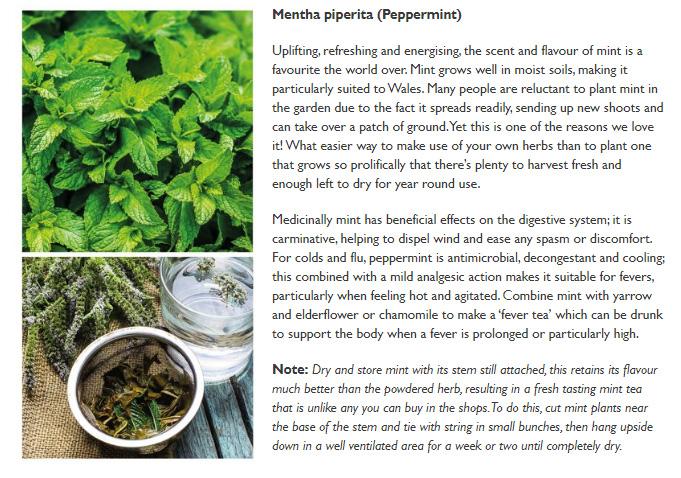
Mentha piperita (Peppermint)
Uplifting, refreshing and energising, the scent and flavour of mint is a favourite the world over. Mint grows well in moist soils, making it particularly suited to Wales. Many people are reluctant to plant mint in the garden due to the fact it spreads readily, sending up new shoots and can take over a patch of ground. Yet this is one of the reasons we love it! What easier way to make use of your own herbs than to plant one that grows so prolifically that there’s plenty to harvest fresh and enough left to dry for year round use.
Medicinally mint has beneficial effects on the digestive system; it is carminative, helping to dispel wind and ease any spasm or discomfort. For colds and flu, peppermint is antimicrobial, decongestant and cooling; this combined with a mild analgesic action makes it suitable for fevers, particularly when feeling hot and agitated. Combine mint with yarrow and elderflower or chamomile to make a ‘fever tea’ which can be drunk to support the body when a fever is prolonged or particularly high.
Note: Dry and store mint with its stem still attached, this retains its flavour much better than the powdered herb, resulting in a fresh tasting mint tea that is unlike any you can buy in the shops. To do this, cut mint plants near the base of the stem and tie with string in small bunches, then hang upside down in a well ventilated area for a week or two until completely dry.
Chamomilla recutita (German chamomile)
Sweet chamomile is gentle enough for children, but that doesn’t mean it’s not effective for adults. In the garden chamomile attracts pollinators such as bees and hoverflies with its pretty daisy-like, scented flowers. As a medicine, the long list of chamomile’s uses is surprising. It has a place in the treatment of insomnia, anxiety, menopausal depression, loss of appetite, dyspepsia, gastric ulcers, diarrhoea, colic, aches and pains of flu, migraine, neuralgia, teething, vertigo, motion sickness, conjunctivitis, inflamed skin, urticaria and more!
One of the great benefits of chamomile is the dual action on the nervous and digestive systems; easing agitation and muscular tension caused by anxiety and stress whilst also improving digestive functions through its mild bitter and aromatic principles. In this way it is perfect for a digestive system upset by nervousness or stress.
Pick chamomile flowers regularly to encourage more to form. Those that you don’t use straight away can be dried for later use. Lay the flowers on a baking tray in a warm dry place for a week or two, then store in an airtight jar. To make a tea from chamomile follow the instructions for making a tea as above, using 2-3 heaped teaspoons of dried chamomile flowers to one cup of boiling water. Always ensure the tea is covered whilst infusing to prevent the loss of valuable essential oils.
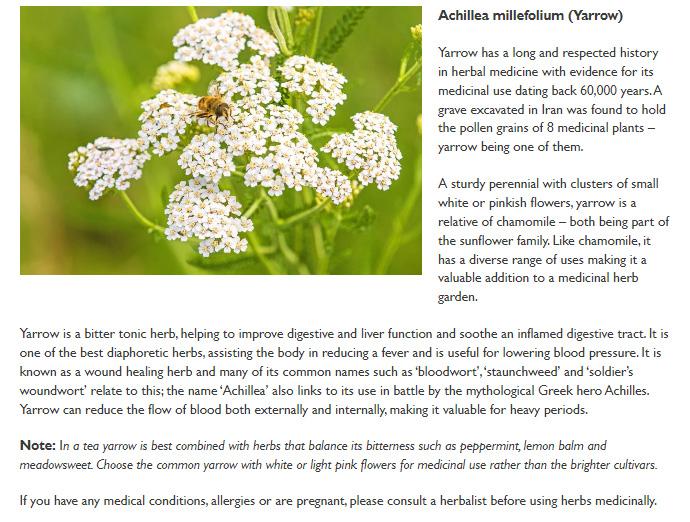
Achillea millefolium (Yarrow)
Yarrow has a long and respected history in herbal medicine with evidence for its medicinal use dating back 60,000 years. A grave excavated in Iran was found to hold the pollen grains of 8 medicinal plants – yarrow being one of them.
A sturdy perennial with clusters of small white or pinkish flowers, yarrow is a relative of chamomile – both being part of the sunflower family. Like chamomile, it has a diverse range of uses making it a valuable addition to a medicinal herb garden.
Yarrow is a bitter tonic herb, helping to improve digestive and liver function and soothe an inflamed digestive tract. It is one of the best diaphoretic herbs, assisting the body in reducing a fever and is useful for lowering blood pressure. It is known as a wound healing herb and many of its common names such as ‘bloodwort’, ‘staunchweed’ and ‘soldier’s woundwort’ relate to this; the name ‘Achillea’ also links to its use in battle by the mythological Greek hero Achilles. Yarrow can reduce the flow of blood both externally and internally, making it valuable for heavy periods.
Note: In a tea yarrow is best combined with herbs that balance its bitterness such as peppermint, lemon balm and meadowsweet. Choose the common yarrow with white or light pink flowers for medicinal use rather than the brighter cultivars.
If you have any medical conditions, allergies or are pregnant, please consult a herbalist before using herbs medicinally.
The ‘Herbal Clinic’ in Swansea provides natural medicine healthcare with the use of organic herbs, acupuncture and iridology.

This Post Has 0 Comments