
The Benefits of Berries
Published in the September 2023 edition of ‘The Bay’ Magazine


The Benefits of Berries – printer friendly, text version
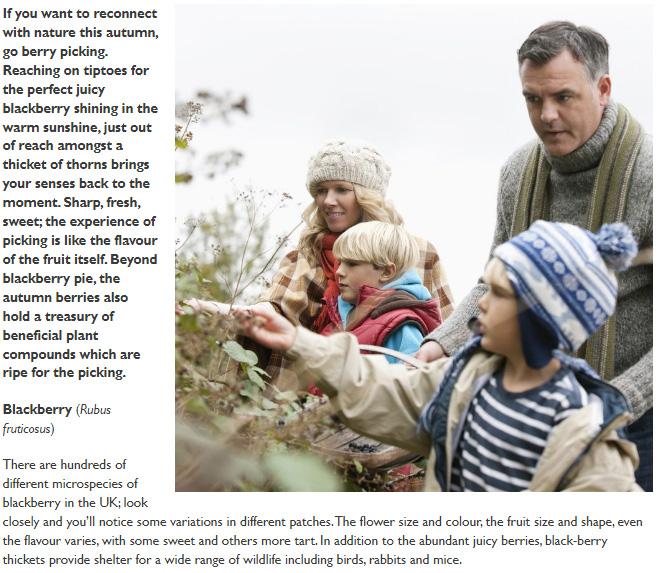
If you want to reconnect with nature this autumn, go berry picking. Reaching on tiptoes for the perfect juicy blackberry shining in the warm sunshine, just out of reach amongst a thicket of thorns brings your senses back to the moment. Sharp, fresh, sweet; the experience of picking is like the flavour of the fruit itself. Beyond blackberry pie, the autumn berries also hold a treasury of beneficial plant compounds which are ripe for the picking.
Blackberry (Rubus fruticosus)
There are hundreds of different microspecies of blackberry in the UK; look closely and you’ll notice some variations in different patches. The flower size and colour, the fruit size and shape, even the flavour varies, with some sweet and others more tart. In addition to the abundant juicy berries, blackberry thickets provide shelter for a wide range of wildlife including birds, rabbits and mice.
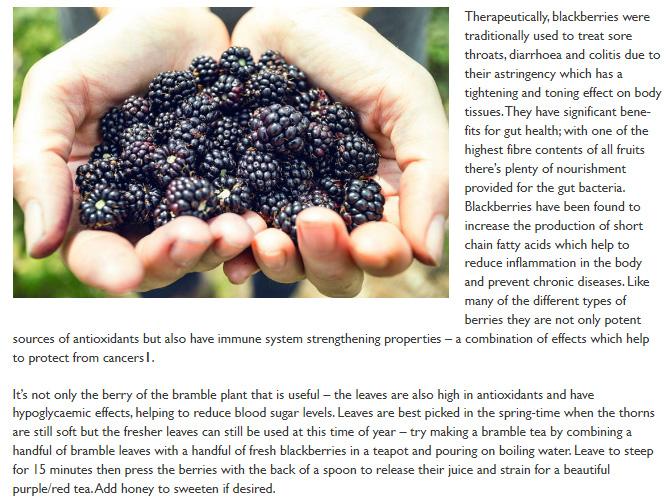
Therapeutically, blackberries were traditionally used to treat sore throats, diarrhoea and colitis due to their astringency which has a tightening and toning effect on body tissues. They have significant benefits for gut health; with one of the highest fibre contents of all fruits there’s plenty of nourishment provided for the gut bacteria. Blackberries have been found to increase the production of short chain fatty acids which help to reduce inflammation in the body and prevent chronic diseases. Like many of the different types of berries they are not only potent sources of antioxidants but also have immune system strengthening properties – a combination of effects which help to protect from cancers1.
It’s not only the berry of the bramble plant that is useful – the leaves are also high in antioxidants and have hypoglycaemic effects, helping to reduce blood sugar levels. Leaves are best picked in the springtime when the thorns are still soft but the fresher leaves can still be used at this time of year – try making a bramble tea by combining a handful of bramble leaves with a handful of fresh blackberries in a teapot and pouring on boiling water. Leave to steep for 15 minutes then press the berries with the back of a spoon to release their juice and strain for a beautiful purple/red tea. Add honey to sweeten if desired.
Guelder rose (Viburnum opulus)
You won’t find many others competing to pick the bright red berries of the Guelder rose – even those who are aware of its edible status struggle to find ways to balance its sour and bitter taste (combined with a smell of ‘old socks’ as it cooks!). However, in North America this berry is known as the ‘European cranberry’ and there are similarities to the tart red berry that we embrace in the winter season.
In Eastern Europe and Russia the red fruits are traditionally used in jams, cordials, liqueurs, teas and pies and the Guelder rose holds a place of importance in Ukrainian folklore; according to legend the ‘kalyna’; was associated with the birth of the universe and its berries symbolise home, native land, blood and family roots.
Viburnum berries are rich in vitamin C and potassium and have anti-inflammatory properties. They have been used to treat coughs and colds, heart disease, high blood pressure, neurosis and diabetes as well as liver and skin conditions.
If you’re feeling adventurous, pick Guelder rose berries after the first frost (or pop them in the freezer) before using them as this helps to mellow them and bring out a little sweetness.
Bilberry/Wimberry (Vaccinium myrtillus)
The name bilberry originates from the Danish word ‘bollebar’ meaning ‘dark berry’, though in Wales Vaccinium myrtillus is more widely known as wimberry. Bilberries are our native blueberries – being in the same genus (blueberry is Vaccinium corymbosum), they look very similar on the outside, but inside the bilberry is dark purple in colour and as a result has a higher anthocyanin content than most other berries; it is one of the richest sources of this plant pigment. Anthocyanins have been widely studied and have been found to be antioxidant, improve visual and neurological health and are protective against a number of chronic diseases.
Bilberry has a long history of use for eye disorders and promoting visual health; research supports these uses. One study found that bilberry encouraged the renewal of corneal cells, another found that symptoms of ‘asthenopia’ or eye fatigue were improved in 73% of sufferers2.
In addition, the berry has been reported to lower blood glucose and has anti-inflammatory effects – these alongside its high antioxidant levels make it a valuable addition to the diet for the prevention of cardiovascular disease, diabetes, cancer, dementia and age related diseases.
You won’t find fresh bilberries in the shops – look alongside conifer forests and amongst the heather on the welsh hillsides. Prime picking season is August but there are often plenty left for picking in early September.
Other berries to look out for this month include Hawthorn and Elderberry – for more information on their health benefits, identification and recipe ideas visit our website and search the ‘posts’.
- Rameshwar Verma et al. Rubus fruticosus (blackberry) use as an herbal medicine. Pharmacogn Rev. 2014 Jul-Dec; 8(16): 101–104.
- Benzie IFF, Wachtel-Galor S. Herbal Medicine: Biomolecular and Clinical Aspects. 2nd edition. Boca Raton (FL): CRC Press/Taylor & Francis; 2011
The ‘Herbal Clinic’ in Swansea provides natural medicine healthcare with the use of organic herbs, acupuncture and iridology.

This Post Has 0 Comments