Through Mother’s Milk – Part 2
Published in the October 2022 edition of ‘The Bay’ Magazine
Through Mother’s Milk – Part 2: – printer friendly, text version
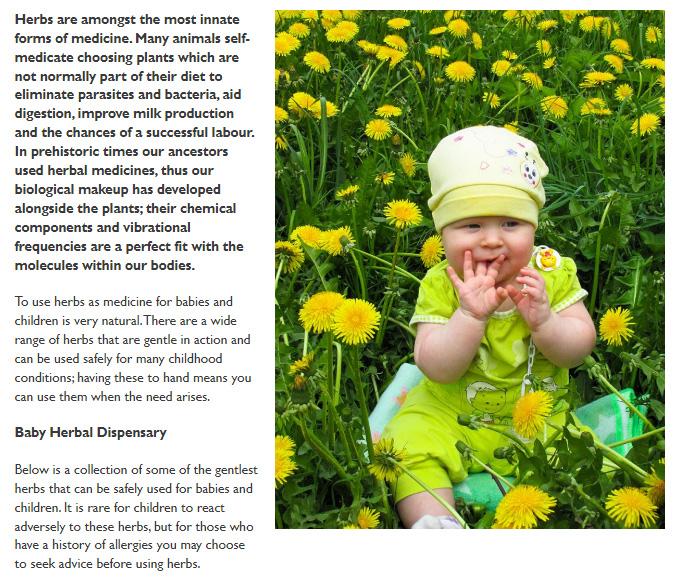
Herbs are amongst the most innate forms of medicine. Many animals self-medicate choosing plants which are not normally part of their diet to eliminate parasites and bacteria, aid digestion, improve milk production and the chances of a successful labour. In prehistoric times our ancestors used herbal medicines, thus our biological makeup has developed alongside the plants; their chemical components and vibrational frequencies are a perfect fit with the molecules within our bodies.
To use herbs as medicine for babies and children is very natural. There are a wide range of herbs that are gentle in action and can be used safely for many childhood conditions; having these to hand means you can use them when the need arises.
Baby Herbal Dispensary
Below is a collection of some of the gentlest herbs that can be safely used for babies and children. It is rare for children to react adversely to these herbs, but for those who have a history of allergies you may choose to seek advice before using herbs.
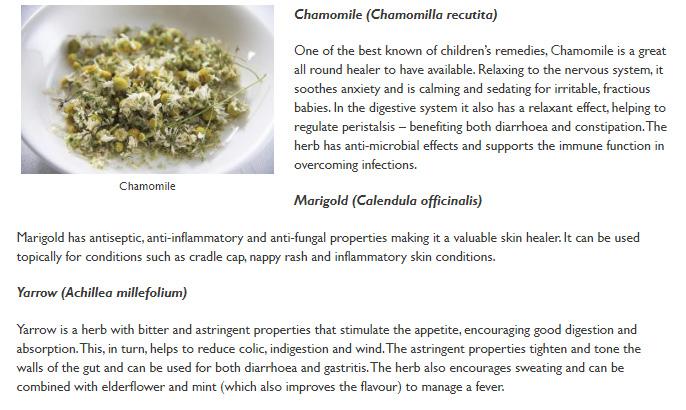
Chamomile (Chamomilla recutita)
One of the best known of children’s remedies, Chamomile is a great all round healer to have available. Relaxing to the nervous system, it soothes anxiety and is calming and sedating for irritable, fractious babies. In the digestive system it also has a relaxant effect, helping to regulate peristalsis – benefiting both diarrhoea and constipation. The herb has anti-microbial effects and supports the immune function in overcoming infections.
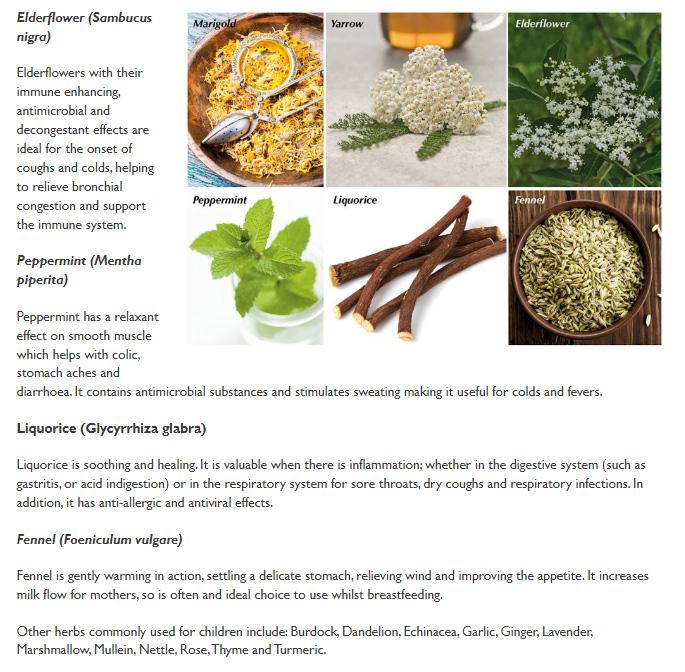
Marigold (Calendula officinalis)
Marigold has antiseptic, anti-inflammatory and anti-fungal properties making it a valuable skin healer. It can be used topically for conditions such as cradle cap, nappy rash and inflammatory skin conditions.
Yarrow (Achillea millefolium)
Yarrow is a herb with bitter and astringent properties that stimulate the appetite, encouraging good digestion and absorption. This, in turn, helps to reduce colic, indigestion and wind. The astringent properties tighten and tone the walls of the gut and can be used for both diarrhoea and gastritis. The herb also encourages sweating and can be combined with elderflower and mint (which also improves the flavour) to manage a fever.
Elderflower (Sambucus nigra)
Elderflowers with their immune enhancing, antimicrobial and decongestant effects are ideal for the onset of coughs and colds, helping to relieve bronchial congestion and support the immune system.
Peppermint (Mentha piperita)
Peppermint has a relaxant effect on smooth muscle which helps with colic, stomach aches and diarrhoea. It contains antimicrobial substances and stimulates sweating making it useful for colds and fevers.
Liquorice (Glycyrrhiza glabra)
Liquorice is soothing and healing. It is valuable when there is inflammation; whether in the digestive system (such as gastritis, or acid indigestion) or in the respiratory system for sore throats, dry coughs and respiratory infections. In addition, it has anti-allergic and antiviral effects.
Fennel (Foeniculum vulgare)
Fennel is gently warming in action, settling a delicate stomach, relieving wind and improving the appetite. It increases milk flow for mothers, so is often and ideal choice to use whilst breastfeeding.
Other herbs commonly used for children include: Burdock, Dandelion, Echinacea, Garlic, Ginger, Lavender, Marshmallow, Mullein, Nettle, Rose, Thyme and Turmeric.
Baby Microbiome
Research has found that colic and allergies are more prevalent in babies with a microbiome that lacks diversity. The number of Lactobacilli and Bifidobacteria have also been reported to be reduced in infants who suffer with colic compared with those who do not1. Many of the herbs listed above have a beneficial effect on the microbiome; use regularly for best effects.
Treat Anxiety
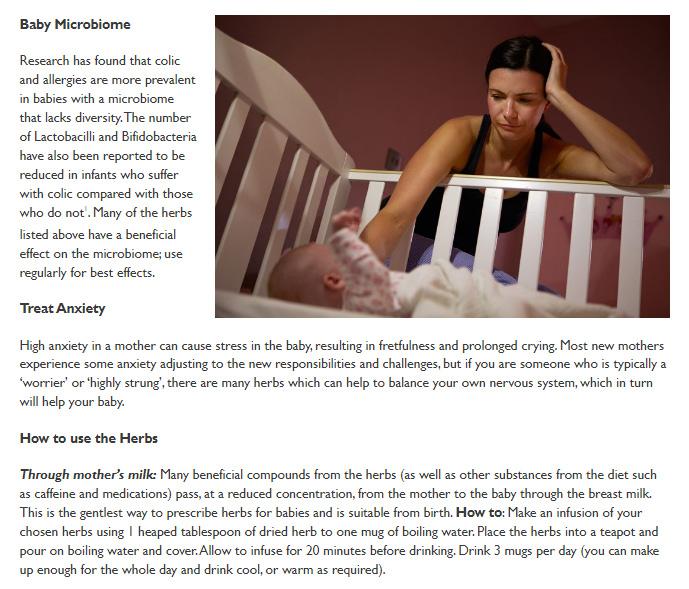
High anxiety in a mother can cause stress in the baby, resulting in fretfulness and prolonged crying. Most new mothers experience some anxiety adjusting to the new responsibilities and challenges, but if you are someone who is typically a ‘worrier’ or ‘highly strung’, there are many herbs which can help to balance your own nervous system, which in turn will help your baby.
How to use the Herbs
Through mother’s milk: Many beneficial compounds from the herbs (as well as other substances from the diet such as caffeine and medications) pass, at a reduced concentration, from the mother to the baby through the breast milk. This is the gentlest way to prescribe herbs for babies and is suitable from birth. How to: Make an infusion of your chosen herbs using 1 heaped tablespoon of dried herb to one mug of boiling water. Place the herbs into a teapot and pour on boiling water and cover. Allow to infuse for 20 minutes before drinking. Drink 3 mugs per day (you can make up enough for the whole day and drink cool, or warm as required).
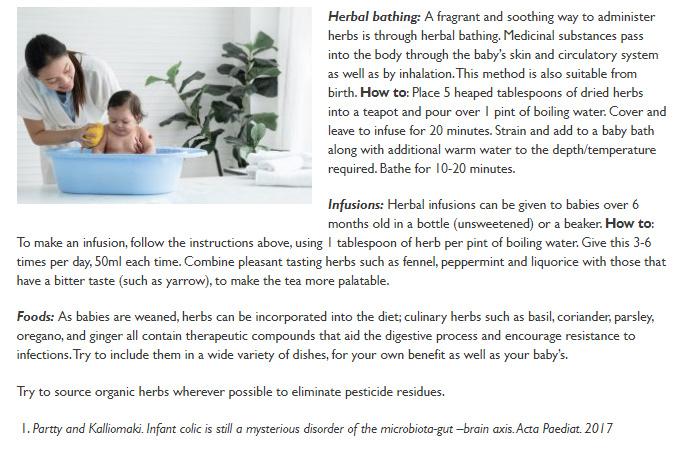
Herbal bathing: A fragrant and soothing way to administer herbs is through herbal bathing. Medicinal substances pass into the body through the baby’s skin and circulatory system as well as by inhalation. This method is also suitable from birth. How to: Place 5 heaped tablespoons of dried herbs into a teapot and pour over 1 pint of boiling water. Cover and leave to infuse for 20 minutes. Strain and add to a baby bath along with additional warm water to the depth/temperature required. Bathe for 10-20 minutes.
Infusions: Herbal infusions can be given to babies over 6 months old in a bottle (unsweetened) or a beaker. How to: To make an infusion, follow the instructions above, using 1 tablespoon of herb per pint of boiling water. Give this 3-6 times per day, 50ml each time. Combine pleasant tasting herbs such as fennel, peppermint and liquorice with those that have a bitter taste (such as yarrow), to make the tea more palatable.
Foods: As babies are weaned, herbs can be incorporated into the diet; culinary herbs such as basil, coriander, parsley, oregano, and ginger all contain therapeutic compounds that aid the digestive process and encourage resistance to infections. Try to include them in a wide variety of dishes, for your own benefit as well as your baby’s.
Try to source organic herbs wherever possible to eliminate pesticide residues.
The ‘Herbal Clinic’ in Swansea provides natural medicine healthcare with the use of organic herbs, acupuncture and iridology.

This Post Has 0 Comments