
Ginger: Zingiber officinale
 Published in the October 2015 edition of ‘The Bay’ Magazine.
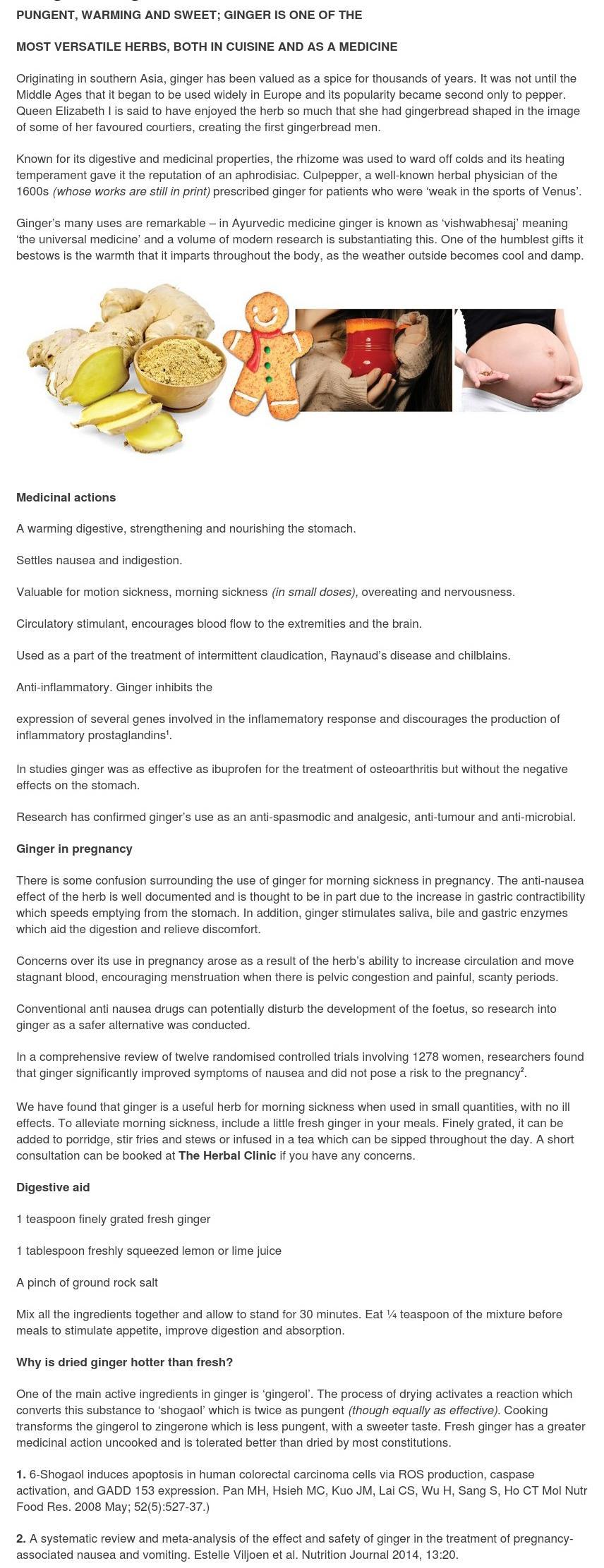
Ginger: Zingiber officinale – printer friendly, text version
Pungent, warming and sweet; ginger is one of the most versatile herbs, both in cuisine and as a medicine.
Originating in southern Asia, ginger has been valued as a spice for thousands of years. It was not until the Middle Ages that it began to be used widely in Europe and its popularity became second only to pepper. Queen Elizabeth I is said to have enjoyed the herb so much that she had gingerbread shaped in the image of some of her favoured courtiers, creating the first gingerbread men.
Known for its digestive and medicinal properties, the rhizome was used to ward off colds and its heating temperament gave it the reputation of an aphrodisiac. Culpepper, a well-known herbal physician of the 1600s (whose works are still in print) prescribed ginger for patients who were ‘weak in the sports of Venus’.
Ginger’s many uses are remarkable – in Ayurvedic medicine ginger is known as ‘vishwabhesaj’ meaning ‘the universal medicine’ and a volume of modern research is substantiating this. One of the humblest gifts it bestows is the warmth that it imparts throughout the body, as the weather outside becomes cool and damp.
Medicinal Actions
A warming digestive, strengthening and nourishing the stomach. Settles nausea and indigestion; valuable for motion sickness, morning sickness (in small doses), overeating and nervousness.
Circulatory stimulant, encourages blood flow to the extremities and the brain. Used as a part of the treatment of intermittent claudication, Raynaud’s disease and chilblains.
Anti-inflammatory. Ginger inhibits the expression of several genes involved in the inflammatory response and discourages the production of inflammatory prostaglandins1. In studies ginger was as effective as ibuprofen for the treatment of osteoarthritis but without the negative effects on the stomach.
Research has confirmed ginger’s use as an antispasmodic and analgesic, antitumour and antimicrobial.
Ginger in Pregnancy
There is some confusion surrounding the use of ginger for morning sickness in pregnancy. The anti-nausea effect of the herb is well documented and is thought to be in part due to the increase in gastric contractibility which speeds emptying from the stomach. In addition, ginger stimulates saliva, bile and gastric enzymes which aid the digestion and relieve discomfort.
Concerns over its use in pregnancy arose as a result of the herb’s ability to increase circulation and move stagnant blood, encouraging menstruation when there is pelvic congestion and painful, scanty periods.
Conventional anti nausea drugs can potentially disturb the development of the foetus, so research into ginger as a safer alternative was conducted.
In a comprehensive review of twelve randomised controlled trials involving 1278 women, researchers found that ginger significantly improved symptoms of nausea and did not pose a risk to the pregnancy2.
We have found that ginger is a useful herb for morning sickness when used in small quantities, with no ill effects. To alleviate morning sickness include a little fresh ginger in your meals. Finely grated, it can be added to porridge, stir fries and stews or infused in a tea which can be sipped throughout the day. A short consultation can be booked at The Herbal Clinic if you have any concerns.
Digestive Aid
1 teaspoon finely grated fresh ginger
1 tablespoon freshly squeezed lemon or lime juice
A pinch of ground rock salt
Mix all the ingredients together and allow to stand for 30 minutes. Eat ¼ teaspoon of the mixture before meals to stimulate appetite, improve digestion and absorption.
Why is dried ginger hotter than fresh?
One of the main active ingredients in ginger is ‘gingerol’. The process of drying activates a reaction which converts this substance to ‘shogaol’ which is twice as pungent (though equally as effective). Cooking transforms the gingerol to zingerone which is less pungent, with a sweeter taste. Fresh ginger has a greater medicinal action uncooked and is tolerated better than dried by most constitutions.
The Herbal Clinic in Swansea provides natural healthcare with the use of organic herbs, acupuncture and iridology.

Hello everyone,
how much fresh grated ginger is allowed to use for tea? Because I am reading around 4-5grams per day, but this is realy small amount of grated fresh ginger for tea.
Thank You very much for explanation.
BR
Good morning
Generally 4-5g (roughly 4-5 teaspoons) per day is the recommended quantity of fresh ginger. Higher than 5g and there is a greater chance of having some side effects such as acid indigestion and diarrhoea.
Everyone is different however and some people can tolerate more than others – it’s best to be particularly careful if you have a ‘hot’ constitution (tend to feel warm rather than cold, prone to acidity and diarrhoea) and of course if you are taking medication be cautious of any interactions there. If pregnant or suffering with kidney disease it’s best to consult someone before taking in any quantity.
Kind regards